 MHI Solutions Improving Supply Chain Performance

The Scan, Label, Apply and Manifest (SLAM) Industry Group of MHI offers automated solutions for packaging and shipping products from a warehouse—and now the group has established a new committee for automating inbound processes: Warehouse Automated Receipt and Putaway (WARP).
WARP is almost an identical process to the SLAM outbound system, except it’s for incoming goods, said Bruce Muir, director of industry solutions sales at MHI member SICK Inc., and chair of SLAM’s WARP committee.
“We receive product, and as part of the receiving process, we can dimension cartons and weigh them to make sure the product is not damaged in any way, and it is the correct item,” Muir said. “Then we can label cartons and route them to wherever the product is to be put away.”
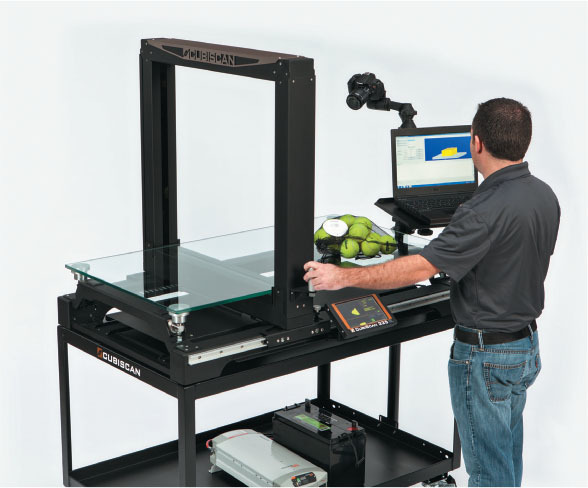
The Cubiscan 325 is used to capture the precise dimensions and weight of inventory items, which are then populated in the master data table of a warehouse management software system.
During the receiving process, warehouse workers can also accomplish a few other tasks, he said. For instance, as the product is scanned, they can check the customer’s enterprise resource planning (ERP) system to verify whether all key product details—such as weight, volume, images and units of measure—are present and up to date.
“That way, later on when they’re assembling outbound shipments, we’ll know what the entire order should weigh and pick the best size outbound box for shipment,” Muir said. “In an e‑commerce operation, knowing the dimensions and weight of the outbound shipment can help them properly apply shipping charges as customers check out. Missing or inaccurate master data can be a big problem.”
If a warehouse uses automated storage and retrieval systems, it’s crucial to know on the front end how the product will be handled, how it will be profiled within the facility and how much to charge for it when it leaves, he said.
“That’s one of the things that a welldesigned WARP system can do for companies, because as you’re scanning and automating that process inbound, we can make sure that you always have clean master data for your operations,” Muir said.
The WARP committee aims to create awareness in the industry that this kind of equipment exists, he said. The committee is developing informational materials explaining the systems, how they work and the benefits for customers. WARP is also compiling vendor lists to identify who can assist with integration or equipment needs.
“From a scope perspective, we’re starting from when a truck backs into the unloading bay. That way, WARP also opens up a lot of potential opportunities for a broader range of vendors to participate, like robotic and automated truck unloading systems or semi‑automatic truck unloading systems,” Muir said. “Our WARP systems then extend through the receiving process, all the way to putting product away into pickable locations.”
The WARP committee is comprised of vendors that supply equipment, software and services for these types of processes, including storage, measurement or cataloging, for all kinds of organizations in the warehouse, Craig Bailey, director of integration/automation services for MHI member Cubiscan, said.
The primary purpose of the committee is to educate people not on specific products, but on the processes and types of software available—things that will help people find ways to improve efficiency in their warehouses, Bailey said. The goal is to identify current inefficiencies, recognize where excess labor is being used and introduce opportunities to implement automation that enhances overall efficiency.
“If I own a business looking for these kinds of services, I want to know that I’m speaking to somebody who knows what they’re talking about,” he says. “The WARP committee members are subject matter experts in the topics being presented—it’s just imperative.”