 MHI Solutions Improving Supply Chain Performance
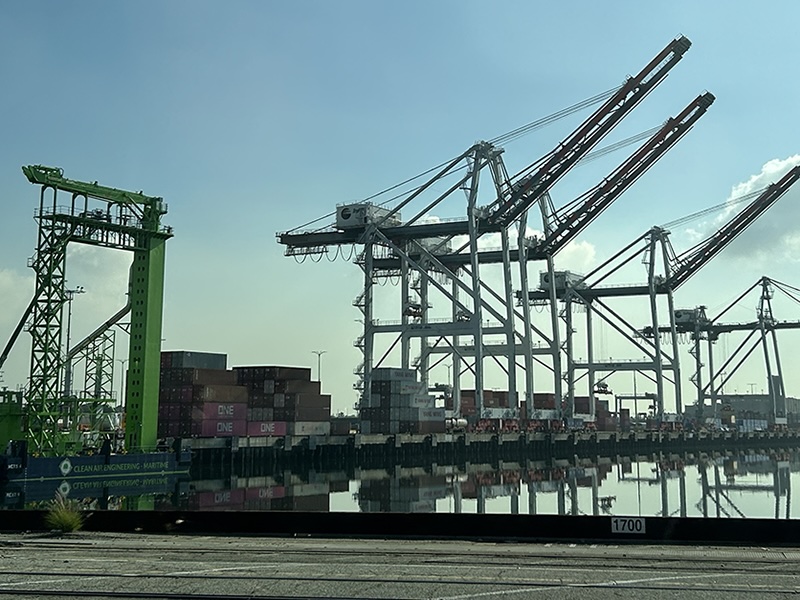
At one of the nation’s busiest ports, propane delivers reliable, full-duty performance—cutting energy costs by approximately $1 million annually without the need for grid upgrades or complex infrastructure.
When uptime is critical, fuel choice directly impacts both performance and cost. At West Basin Container Terminal (WBCT) in the Port of Los Angeles, propane has become a proven solution, delivering reliable, diesel-equivalent performance while reducing energy costs by approximately $1 million each year.
Operating one of the busiest marine terminals in the country, WBCT relies on propane-powered equipment to keep cargo moving without interruption. With rapid 10-minute refueling, no exposure to grid disruptions, and lower overall fuel costs, propane supports continuous operations while helping meet both financial and environmental goals.
Meeting the Demands of a High-Volume Operation
Handling approximately 1.5 million TEUs each year, WBCT operates at a pace where equipment uptime and operational efficiency are critical. A large fleet of yard tractors, forklifts, and cargo-handling equipment must perform consistently to keep goods moving through this high-volume port environment.
In this setting, even minor disruptions can create costly delays. Fuel choice plays a central role in maintaining productivity—requiring a solution that delivers consistent performance, fast turnaround, and predictable operating costs at scale.
A Strategic Shift to Propane
To meet these demands, WBCT made a pivotal decision more than two decades ago to move away from diesel and adopt propane as the primary fuel for its yard tractor fleet.
“We were the first container terminal in the U.S. to convert our yard tractor fleet totally to propane over 20 years ago,” said Willy Won, Director of Engineering for Ports America. “That decision was driven by our commitment to reduce emissions while maintaining operational performance and cost-effectiveness.”
From the outset, WBCT needed a solution that could meet strict regulatory requirements without compromising uptime or power. Propane provided that balance—offering cleaner operation while remaining practical to store, transport, and refuel at scale.
Lower Costs That Improve the Bottom Line
At WBCT, fuel is one of the largest operating expenses—making cost efficiency essential to long-term performance. Propane has consistently delivered measurable savings across daily operations.
Compared to diesel, propane has reduced fuel spend by approximately 25%, with operating costs averaging $6.17 per hour versus $8.14 for diesel. Combined with lower maintenance and repair costs from simplified engine systems, these savings create a meaningful financial advantage.
“Fuel is one of our biggest operating costs, and propane has consistently delivered savings,” Won noted.
Together, these efficiencies contribute to approximately $1 million in annual energy cost reductions. At the same time, propane’s stable, domestically produced supply helps protect WBCT from fuel price volatility and supports long-term budget planning.
Reliable Performance Without Downtime
At one of the busiest ports in the world, downtime is not an option. WBCT’s propane-powered fleet delivers the same duty cycles and horsepower as diesel, ensuring consistent performance across demanding operations.
“When a propane unit runs out of fuel, it takes about 10 minutes to refuel and get back to work,” Won explained. “Compare that with electric counterparts, which may be down for multiple shifts waiting for a charge.”
This rapid refueling capability keeps equipment in operation with minimal interruption. Unlike electric systems, propane does not depend on grid capacity—helping WBCT avoid disruptions caused by brownouts and infrastructure limitations.
“Infrastructure has been a major issue for electric systems,” Won added. “The brownouts we’ve experienced and the limitations of our electrical grid have made propane a reliable solution as we work toward long-term zero-emission goals.”
Cleaner Operations Without Compromise
By transitioning from diesel to propane, WBCT has achieved significant improvements in emissions performance while maintaining the demands of a high-volume port environment.
Propane-powered equipment has reduced tailpipe nitrogen oxide (NOx) emissions by up to 99.9%, along with a 75% reduction in total hydrocarbons. When renewable propane is used, lifecycle carbon dioxide (CO₂) emissions are reduced by more than 74%.
Importantly, these gains come without sacrificing performance. Propane continues to deliver the power, uptime, and reliability WBCT requires—demonstrating that cleaner operations do not require tradeoffs in productivity.
A Proven Solution for Modern Port Operations
WBCT has also demonstrated propane’s capability in demanding, large-scale operations. The PSI 8.8-liter engines used in its terminal tractors deliver 270 horsepower and 565 foot-pounds of torque—meeting the terminal’s heavy-duty performance requirements. With on-site storage capacity exceeding 100,000 gallons, the facility’s refueling infrastructure is designed to support continuous operations and future growth.
“The reliability and performance we’ve experienced using propane, combined with ongoing advancements in ultra-low emissions engines, make it a compelling choice not just for today, but for years to come,” Won said.
WBCT’s decades-long success shows that propane is not a transitional solution—it is a proven, scalable energy choice for high-demand operations. By delivering lower operating costs, reliable performance, and measurable emissions reductions, propane enables ports to meet today’s operational and regulatory demands without compromise.
Learn More:
Explore how propane can support your operation at propane.com/ports.