 MHI Solutions Improving Supply Chain Performance
A coordinated industry effort is raising safety, improving training and modernizing best practices for overhead lifting.
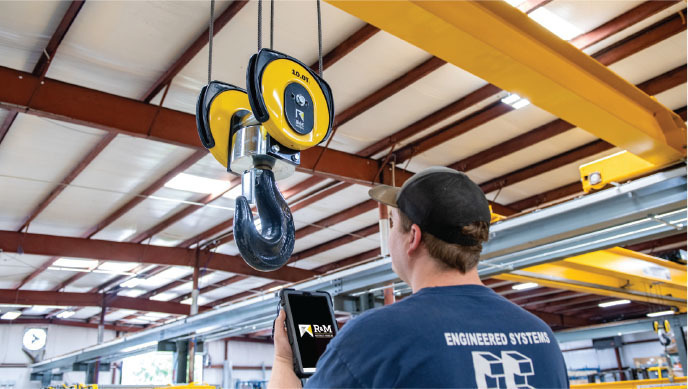
Some overhead lifting systems allow for connection to hoist monitoring devices, helping operators and service technicians to analyze usage trends and reduce exposure to electrical hazards.
THROUGH HIGHLY EFFECTIVE collaboration, the Overhead Alliance combines the expertise of three long‑time MHI Industry Groups to provide invaluable insights and advocacy on the use of overhead equipment, including hoists, monorails and cranes. No topic is more important to the alliance’s members than safety.
The alliance consists of the Hoist Manufacturers Institute (HMI), the Monorail Manufacturers Association (MMA) and the Crane Manufacturers Association of America (CMAA). Together and individually, the groups advocate for the safe design and use of products through a variety of overhead‑lifting safety initiatives designed to reach key audiences in a straightforward, accessible way. The Overhead Alliance serves as a collective marketing arm for the three groups, using their joint strength to promote their efforts.
The alliance particularly seeks to promote the places where hoists, cranes and monorails intersect and expand understanding of the safe operations of their products as their uses continue to evolve, including the use of bigger, higher‑capacity equipment and increased automation.
Throughout its existence, the alliance has helped showcase the safety work being done by each of its three member groups, amplifying those efforts. For instance, Erin Drake, head of the Overhead Alliance and director of marketing for R&M Materials Handling and Demag Cranes & Components, pointed to the CMAA’s safety‑related specifications and the materials promoted through the alliance. Topics covered range from proper inspection and maintenance of overhead cranes to hazard identification checklists and procedures that encourage the safe daily operation of the crane.
Rose Haire, the MHI manager of the groups in the Overhead Alliance, said regular updates to specifications and standards are among the most vital safety efforts pursued by alliance members.
“The specifications and standards that they maintain are a very important part of their mission because they take great pride in their work, and they want to ensure that the products are used the way they are supposed to be used and in the safest manner possible,” Haire said.
For instance, the CMAA revises its specifications every five years to keep up with changes in its field, with a particular focus on rapidly evolving technology, Haire said. The CMAA most recently updated four specs: Multiple Girder Cranes, Single Girder Cranes, Professional Services and the Crane Operators Manual, which were all released digitally in 2025 and are available at www.mhi.org/cmaa/cranespecifications. Similarly, the MMA released two updated specs in 2025 for Patented Track Underhung Cranes and Monorail Systems and Enclosed Track Underhung Cranes and Monorail Systems, which are now available for purchase as digital downloads at https://www.mhi.org/search?contentType=Standard&industryGroup=MMA.
One of the shared safety advantages that overhead manufacturers in the alliance prioritize in communications is that their equipment helps to protect employees. Among the reasons is that overhead lifting systems operate within a defined area, limiting an employee’s exposure to potential accidents from forklift traffic and other activities. Overhead lifting is designed to keep employees from manually handling all loads, not just heavy ones, and help them avoid injuries associated with the strain of lifting weight.