 MHI Solutions Improving Supply Chain Performance
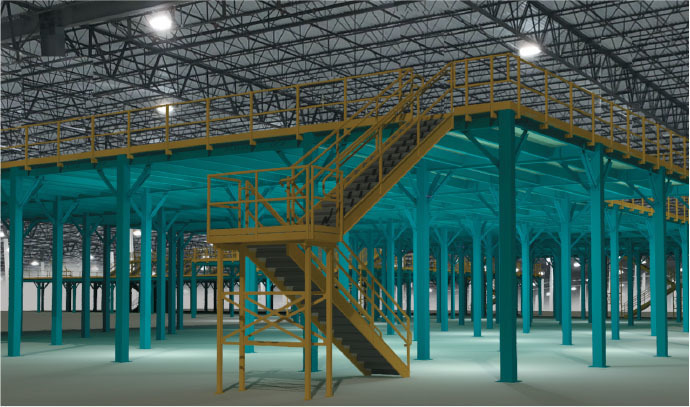
Work platforms increase efficiency and safety.
 WITHIN MHI, THE Storage Manufacturers Association (SMA) serves as a steadying force in an industry undergoing rapid technological change. Its members design and manufacture the platforms, shelving and elevated work structures that form the literal foundation of modern warehouses and distribution centers.
What distinguishes SMA is its commitment to shared standards, engineering rigor and a long‑term approach to safety—priorities championed by its current leaders: Chris Pahls, chair and product manager for platforms at MHI member Steel King Industries, Inc.; Keith Shipman, vice chair and national sales manager at MHI member Cornerstone Specialty Wood Products; and Tyler Drouin, acting engineering chair and director of platform design at MHI member Steele Solutions, Inc.
A MISSION ROOTED IN SAFETY AND STANDARDS
Safety remains central to SMA’s mission. As Pahls puts it, “Safety standards are, in our charter, the main thing.” Over the past several years, the group has focused on the progression of standards development and the safety of products across the membership. That work includes maintaining ANSI standards, supporting International Code Council (ICC) code adoption and ensuring that the engineering subcommittee continues to refine and update guidance. “Our engineering chairs and membership delegates meet monthly to continue developing those standards and maintain them going forward,” Pahls said.
Drouin underscores the engineering discipline behind that work. “You can have a standard, but if you don’t have a way of assuring quality is met to that standard, there’s no point in having it,” he said. That belief led SMA to create a formal certification process for platforms—an effort 7 years in the making. The program requires testing, third‑party engineering review and demonstration of quality manufacturing. “It’s pretty exhaustive,” Drouin notes. “Not only from a design and manufacturing standpoint—the application process is thorough and takes a lot of time.”
Pahls adds another dimension: “And expense.”
CERTIFICATION AS AN INDUSTRY BENCHMARK
For Shipman, the certification program is ultimately about trust. “It’s like an insurance policy to the end user,” he said. “The end user gets the benefit of the product being manufactured to standards, and they know it’s compliant; that they are getting a product that is top of the line.”
He points out that the program required competitors to sit together and agree to raise the bar. “It was an extensive and long‑term project,” he said. “Because of the commitment that the members had, we got it done.”
SMA’s next step is to build awareness. Pahls explains, “We want to see that the members who are part of SMA become certified. The next step is an awareness campaign targeting end users who will benefit from that program. We’re targeting that to take place in 2027.”
SUPPORTING A CHANGING WAREHOUSE LANDSCAPE
The group’s work is unfolding at a moment when warehouses are shifting toward automation, robotics and high‑density storage. “Automation is a term that gets thrown out a lot,” Drouin said, noting that SMA is preparing an education panel at MODEX to highlight the interplay between robots, flooring systems and platforms. The goal is to help end users understand how new technology affects design, safety and long‑term performance.
Pahls frames the trend succinctly: “It all boils down to speed and efficiency.” As conveyor systems accelerate and robots replace manual tasks, platforms and shelving become the structural backbone of automated operations. “We’re the foundation that sits in place for all that to be sitting on top of it,” he said.